Hand-Blown Amber Crackle/Bubble Glass Margarita Set with Pitcher
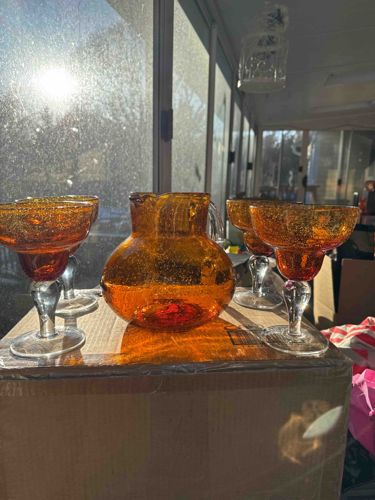
This set consists of one bulbous pitcher and four matching margarita glasses, characterized by a vibrant amber-to-orange ombré color palette. The glassware is crafted from thick, hand-blown glass featuring a distinct 'seeded' or 'burbuja' bubble texture, common in artisan Mexican glassware. The pitcher has a rounded, wide-bottomed body with a tapered neck and a clear, applied glass handle. The margarita glasses feature wide, shallow bowls in matching amber bubble glass, supported by clear glass stems with a decorative bulbous knop and flat circular bases. The irregular distribution of bubbles and slightly varied thicknesses indicate manual production techniques rather than factory molding. The craftsmanship suggests a mid-to-late 20th-century origin, likely from the Tlaquepaque or Tonala regions of Mexico, known for recycled glass artistry. There is no visible branding or maker's marks, which is typical for this style of folk art. The glass appears to be in excellent condition with no visible chips or cracks, showing only the internal inclusions and texture inherent to the blowing process. The heavy weight and organic shapes signify high-quality handmade folk art rather than mass-produced replicas.
AI-Generated Appraisal Disclaimer
Estimated Value
$125 - $175
Basic Information
Category
Glassware / Folk Art
Appraised On
January 21, 2026
Estimated Value
$125 - $175
Item Description
This set consists of one bulbous pitcher and four matching margarita glasses, characterized by a vibrant amber-to-orange ombré color palette. The glassware is crafted from thick, hand-blown glass featuring a distinct 'seeded' or 'burbuja' bubble texture, common in artisan Mexican glassware. The pitcher has a rounded, wide-bottomed body with a tapered neck and a clear, applied glass handle. The margarita glasses feature wide, shallow bowls in matching amber bubble glass, supported by clear glass stems with a decorative bulbous knop and flat circular bases. The irregular distribution of bubbles and slightly varied thicknesses indicate manual production techniques rather than factory molding. The craftsmanship suggests a mid-to-late 20th-century origin, likely from the Tlaquepaque or Tonala regions of Mexico, known for recycled glass artistry. There is no visible branding or maker's marks, which is typical for this style of folk art. The glass appears to be in excellent condition with no visible chips or cracks, showing only the internal inclusions and texture inherent to the blowing process. The heavy weight and organic shapes signify high-quality handmade folk art rather than mass-produced replicas.
Get Your Items Appraised
Instant estimates of your treasures with AI-powered instant appraisals