Hand-Carved Light Wood Elephant Figurine
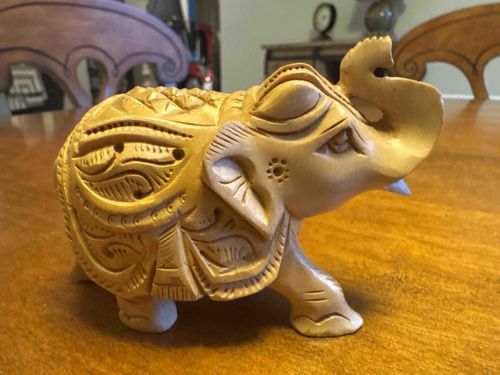
This is a hand-carved animal figurine depicting an elephant with its trunk raised, a traditional symbol of good luck. The piece is crafted from a light-colored, fine-grained wood, likely boxwood or a similar variety common in Southeast Asian or Indian woodworking. It features an ornate level of decorative carving, including a detailed caparison or ceremonial blanket over its back with intricate scrollwork, geometric line patterns, and stippled texture created by point-drilling tools. The animal's face is characterized by large, almond-shaped eyes and stylized eyelids, with a flower-like stippled pattern on the temple. The trunk is curved upward in a dynamic pose, and white tusks (likely bone or plastic inserts) are present. The legs are stocky with carved toes, and the overall construction exhibits a high degree of manual labor and traditional folk-art skill. The condition appears to be very good with no visible cracks or missing pieces, showing a matte natural finish with minimal aging or patina. It likely dates from the late 20th century to the early 21st century and represents a high-quality example of souvenir or export-grade handicraft from the Indian subcontinent.
AI-Generated Appraisal Disclaimer
Estimated Value
$125.00 - $175.00
Basic Information
Category
Decorative Arts and Collectibles
Appraised On
January 27, 2026
Estimated Value
$125.00 - $175.00
Item Description
This is a hand-carved animal figurine depicting an elephant with its trunk raised, a traditional symbol of good luck. The piece is crafted from a light-colored, fine-grained wood, likely boxwood or a similar variety common in Southeast Asian or Indian woodworking. It features an ornate level of decorative carving, including a detailed caparison or ceremonial blanket over its back with intricate scrollwork, geometric line patterns, and stippled texture created by point-drilling tools. The animal's face is characterized by large, almond-shaped eyes and stylized eyelids, with a flower-like stippled pattern on the temple. The trunk is curved upward in a dynamic pose, and white tusks (likely bone or plastic inserts) are present. The legs are stocky with carved toes, and the overall construction exhibits a high degree of manual labor and traditional folk-art skill. The condition appears to be very good with no visible cracks or missing pieces, showing a matte natural finish with minimal aging or patina. It likely dates from the late 20th century to the early 21st century and represents a high-quality example of souvenir or export-grade handicraft from the Indian subcontinent.
Get Your Items Appraised
Instant estimates of your treasures with AI-powered instant appraisals