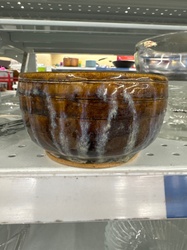
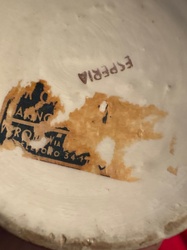
Haeger Pottery Incised Mark on Crazed Glaze Ceramic
Vintage Ceramic Art Pottery

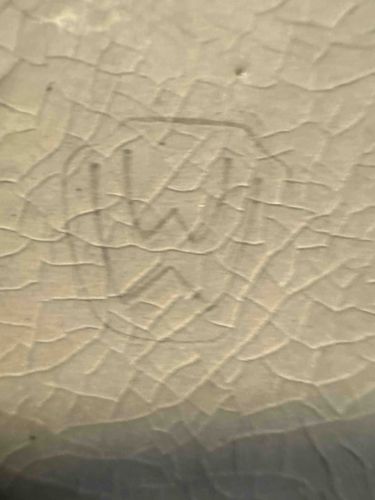
Haeger Pottery Incised Mark on Crazed Glaze Ceramic

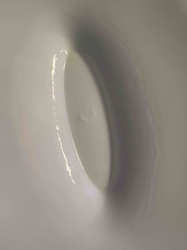
This item features a prominent incised hallmark on a ceramic surface, specifically identifying it as a piece of vintage American art pottery. The mark consists of a stylized 'H' within a shield-like or geometric border, which is highly characteristic of Haeger Potteries, particularly mid-20th-century production. The ceramic body is finished with a cream or off-white glaze that exhibits extensive and heavy 'crazing'—a network of fine hairline cracks across the surface. This crazing is caused by a mismatch in the thermal expansion between the glaze and the clay body. While often considered a defect in modern utilitarian ware, in vintage art pottery, this type of 'alligatoring' or uniform crazing can add aesthetic character and serve as a marker of age, typically dating the piece to the mid-20th century (circa 1940s-1960s). There is evidence of minor surface staining or patina trapped within the cracks, highlighting the age of the piece. No significant chips or structural cracks are visible in this specific detail shot, though the density of the crazing may indicate long-term environmental exposure or a specific firing technique intended to produce a crackle-glaze effect. The craftsmanship is typical of industrial art pottery, where marks were incised into the wet clay before firing.
Estimated Value

$45.00 - $75.00

Basic Information

Category

Vintage Ceramic Art Pottery

Appraised On

January 12, 2026

Estimated Value

$45.00 - $75.00

Additional Details Provided By Owner

User Provided Information

I’m in in

Item Description

This item features a prominent incised hallmark on a ceramic surface, specifically identifying it as a piece of vintage American art pottery. The mark consists of a stylized 'H' within a shield-like or geometric border, which is highly characteristic of Haeger Potteries, particularly mid-20th-century production. The ceramic body is finished with a cream or off-white glaze that exhibits extensive and heavy 'crazing'—a network of fine hairline cracks across the surface. This crazing is caused by a mismatch in the thermal expansion between the glaze and the clay body. While often considered a defect in modern utilitarian ware, in vintage art pottery, this type of 'alligatoring' or uniform crazing can add aesthetic character and serve as a marker of age, typically dating the piece to the mid-20th century (circa 1940s-1960s). There is evidence of minor surface staining or patina trapped within the cracks, highlighting the age of the piece. No significant chips or structural cracks are visible in this specific detail shot, though the density of the crazing may indicate long-term environmental exposure or a specific firing technique intended to produce a crackle-glaze effect. The craftsmanship is typical of industrial art pottery, where marks were incised into the wet clay before firing.
Get Your Items Appraised

Instant estimates of your treasures with AI-powered instant appraisals

Browse More Appraisals