Four-Panel Folding Paper Screen (Byōbu) with Peonies and Bamboo
Asian Art & Antiques

Four-Panel Folding Paper Screen (Byōbu) with Peonies and Bamboo

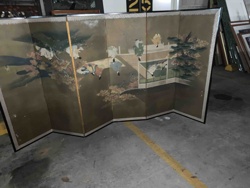
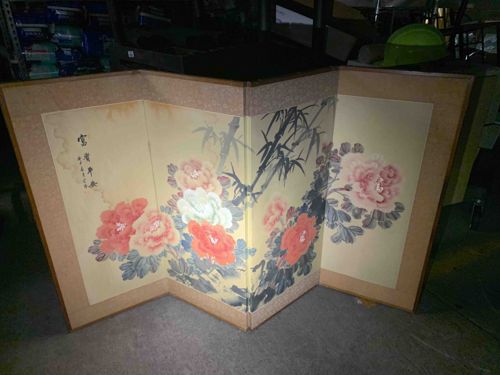
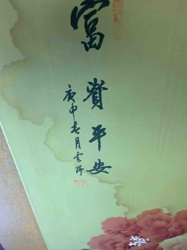
This is a Japanese-style four-panel folding screen, traditionally known as a byobu, featuring ink and color hand-painted motifs on a light-colored paper substrate. The composition depicts vibrant, blooming peonies in shades of coral, pink, and white, contrasted against dark green foliage and slender bamboo stalks executed in black ink. The painting spans across all four panels, a common technique for creating a continuous landscape or scene. The screen is finished with a wide border, possibly silk brocade or patterned paper, in a muted beige tone, and is encased in a simple, thin wooden frame that provides structural integrity. Calligraphic inscriptions and a red seal mark are visible on the far-left panel, indicating a signature or artist's mark, though the specific identity requires further translation. In terms of condition, there is significant foxing (reddish-brown spots) and staining, particularly visible in the upper-left quadrant and along the top edges, which is typical for aged paper. Some minor scuffing and wear are present on the wooden frame. This piece likely dates from the late 19th to early 20th century, reflecting the traditional aesthetic of the Meiji or Taisho periods. The craftsmanship shows professional brushwork with graduated color washes and confident calligraphic lines.
Estimated Value

$400 - $600

Basic Information

Category

Asian Art & Antiques

Appraised On

January 12, 2026

Estimated Value

$400 - $600

Additional Details Provided By Owner

User Provided Information

Age

Item Description

This is a Japanese-style four-panel folding screen, traditionally known as a byobu, featuring ink and color hand-painted motifs on a light-colored paper substrate. The composition depicts vibrant, blooming peonies in shades of coral, pink, and white, contrasted against dark green foliage and slender bamboo stalks executed in black ink. The painting spans across all four panels, a common technique for creating a continuous landscape or scene. The screen is finished with a wide border, possibly silk brocade or patterned paper, in a muted beige tone, and is encased in a simple, thin wooden frame that provides structural integrity. Calligraphic inscriptions and a red seal mark are visible on the far-left panel, indicating a signature or artist's mark, though the specific identity requires further translation. In terms of condition, there is significant foxing (reddish-brown spots) and staining, particularly visible in the upper-left quadrant and along the top edges, which is typical for aged paper. Some minor scuffing and wear are present on the wooden frame. This piece likely dates from the late 19th to early 20th century, reflecting the traditional aesthetic of the Meiji or Taisho periods. The craftsmanship shows professional brushwork with graduated color washes and confident calligraphic lines.
Get Your Items Appraised

Instant estimates of your treasures with AI-powered instant appraisals

Browse More Appraisals