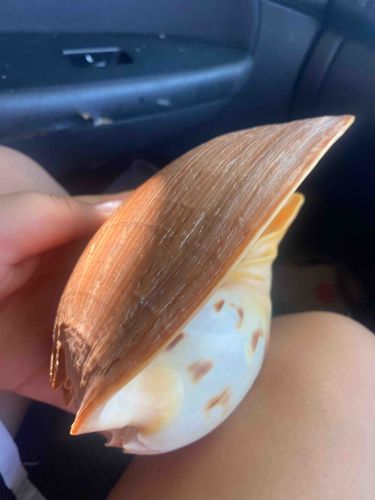
Melo Melo Sea Snail Shell
Natural History / Collectible Shells

Melo Melo Sea Snail Shell

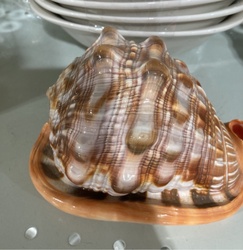
This specimen is a Melo melo shell, also commonly known as the Indian Volute or Baler Shell. Physically, the item exhibits an oval, smooth gastropod structure with a large, swollen body whorl. The exterior coloration consists of a pale cream or yellowish base, accented by distinct, irregularly shaped dark brown spots and streaks. A significant portion of the dorsal side is covered by a natural, darker brown periostracum, which is the organic outer layer of the shell that often wears away over time or with cleaning. The shell's apex is tucked and relatively low, while the aperture appears wide and expansive, typical of this species which was historically used by indigenous people for bailing water from boats. The condition shows some minor chipping along the delicate outer lip and natural growth lines, indicating it is an authentic biological specimen rather than a polished decorative replica. The overall craftsmanship is an example of natural marine architecture, characterized by its substantial weight and robust calcium carbonate construction. This particular shell appears to be of mature age based on its size and the thickness of the shell walls. It lacks any artificial maker's marks, as it is a natural object, though its excellent state of preservation for the periostracum makes it a desirable collector's piece.
Estimated Value

$450 - $650

Basic Information

Category

Natural History / Collectible Shells

Appraised On

February 10, 2026

Estimated Value

$450 - $650

Item Description

This specimen is a Melo melo shell, also commonly known as the Indian Volute or Baler Shell. Physically, the item exhibits an oval, smooth gastropod structure with a large, swollen body whorl. The exterior coloration consists of a pale cream or yellowish base, accented by distinct, irregularly shaped dark brown spots and streaks. A significant portion of the dorsal side is covered by a natural, darker brown periostracum, which is the organic outer layer of the shell that often wears away over time or with cleaning. The shell's apex is tucked and relatively low, while the aperture appears wide and expansive, typical of this species which was historically used by indigenous people for bailing water from boats. The condition shows some minor chipping along the delicate outer lip and natural growth lines, indicating it is an authentic biological specimen rather than a polished decorative replica. The overall craftsmanship is an example of natural marine architecture, characterized by its substantial weight and robust calcium carbonate construction. This particular shell appears to be of mature age based on its size and the thickness of the shell walls. It lacks any artificial maker's marks, as it is a natural object, though its excellent state of preservation for the periostracum makes it a desirable collector's piece.

Get Your Items Appraised

Instant estimates of your treasures with AI-powered instant appraisals

Browse More Appraisals